For a global airline, logistics needs rarely stand still. Networks change, inventory requirements evolve and new challenges can quickly create the need for a different approach.
For Delta Airlines, a relationship with Covenant that began roughly a decade ago has continued to evolve alongside those needs.
Emmett McNair, Director of Onboard Service Materials and Logistics for Delta Airlines, first began working with Covenant when the airline needed a custom trucking network for critical aircraft parts. According to McNair, Covenant’s willingness to listen and build around Delta’s specific requirements helped establish the foundation for what would become a much broader relationship.
“They really listened to what we needed and designed the solution for us.”
Building on a Proven Relationship
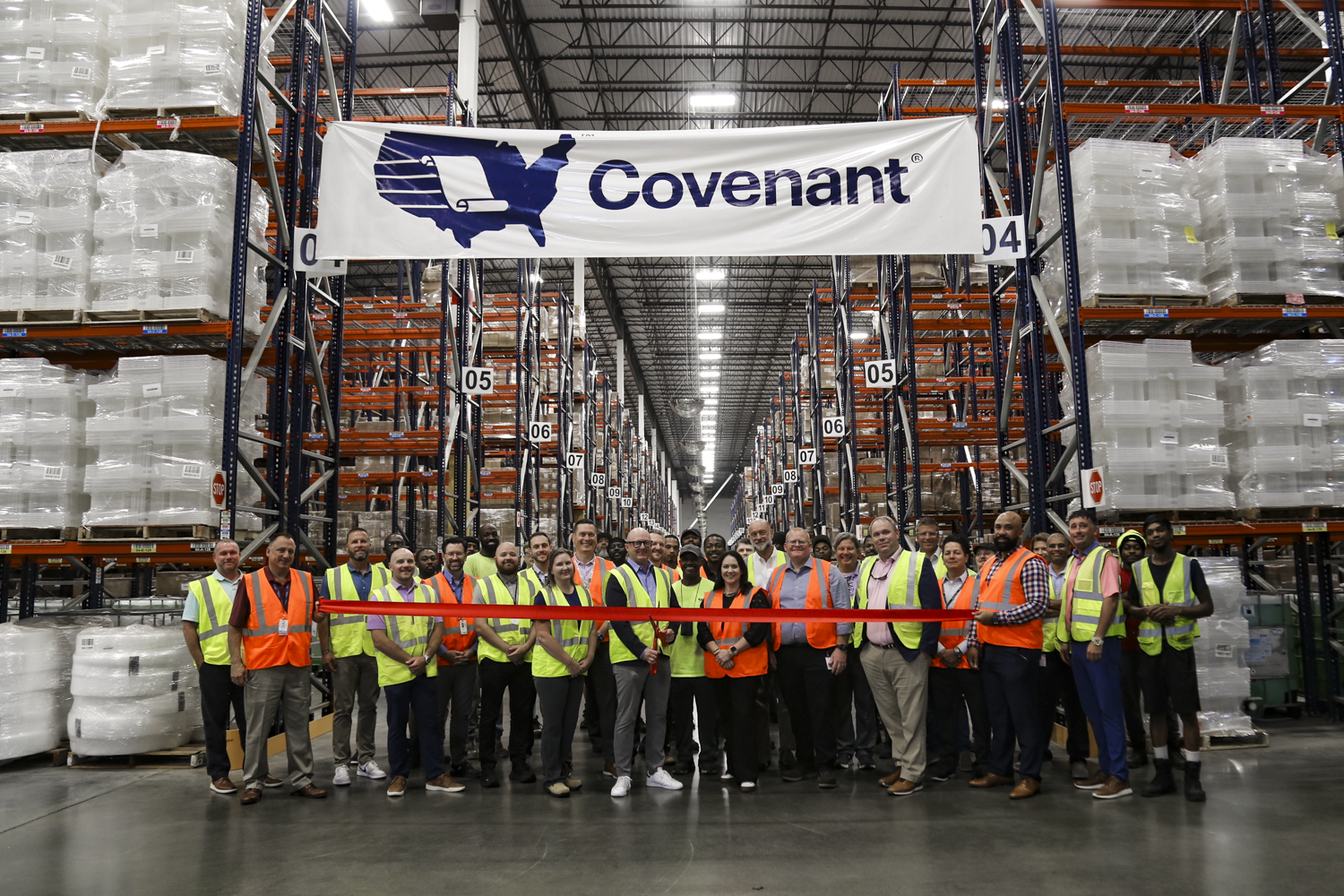
When Delta later needed a new warehousing solution for its onboard products, the airline once again turned to Covenant.
The decision was rooted in Delta’s previous experience. McNair said the team knew Covenant would listen to its requirements, work collaboratively and continue looking for opportunities to improve processes over time.
That approach became particularly important around inventory management. Inventory accuracy had previously been a pain point, and Covenant developed new processes and introduced automation that brought accuracy to near 100%.
But for Delta, the value of the relationship extends beyond any single transportation or warehousing solution.
“Covenant, compared to other logistics companies, listens to its customers and values its customers,” McNair said. “It designs solutions that actually work for the customer, instead of being solutions that work for the company.”
Staying Connected to the Business
As the relationship has grown, Covenant has developed a broader understanding of Delta’s logistics network, from aircraft parts and onboard service materials to storage requirements.
McNair said that understanding allows Covenant to do more than respond to an immediate request. The team can identify opportunities and bring recommendations to Delta based on what it has learned about the airline’s business.
That collaboration also extends throughout the organization. McNair noted that he regularly receives unsolicited texts and emails from Covenant leaders simply checking in, asking how the company is performing and whether Delta’s needs are being met.
“There’s just a high degree of connectivity to what the customers are asking for and soliciting feedback,” he said.
Responding to a Changing Trade Environment
More recently, the changing global trade environment presented another challenge.
Over the past year to year and a half, Delta identified a growing need to better manage its imports and exports. Because Covenant already understood several areas of Delta’s logistics operation, the teams were able to work together on another solution: a foreign trade zone.
Covenant established the FTZ solution to help Delta mitigate import-related risk while creating greater efficiency in how inventory is managed and utilized.
For a partnership that began with moving critical aircraft parts, the expansion into warehousing, inventory optimization and foreign trade zone capabilities demonstrates what can happen when a logistics provider continues learning alongside its customer.
As Delta’s logistics needs have evolved, the solutions have evolved with them.
“There’s just a high degree of connectivity to what the customers are asking for and soliciting feedback.”