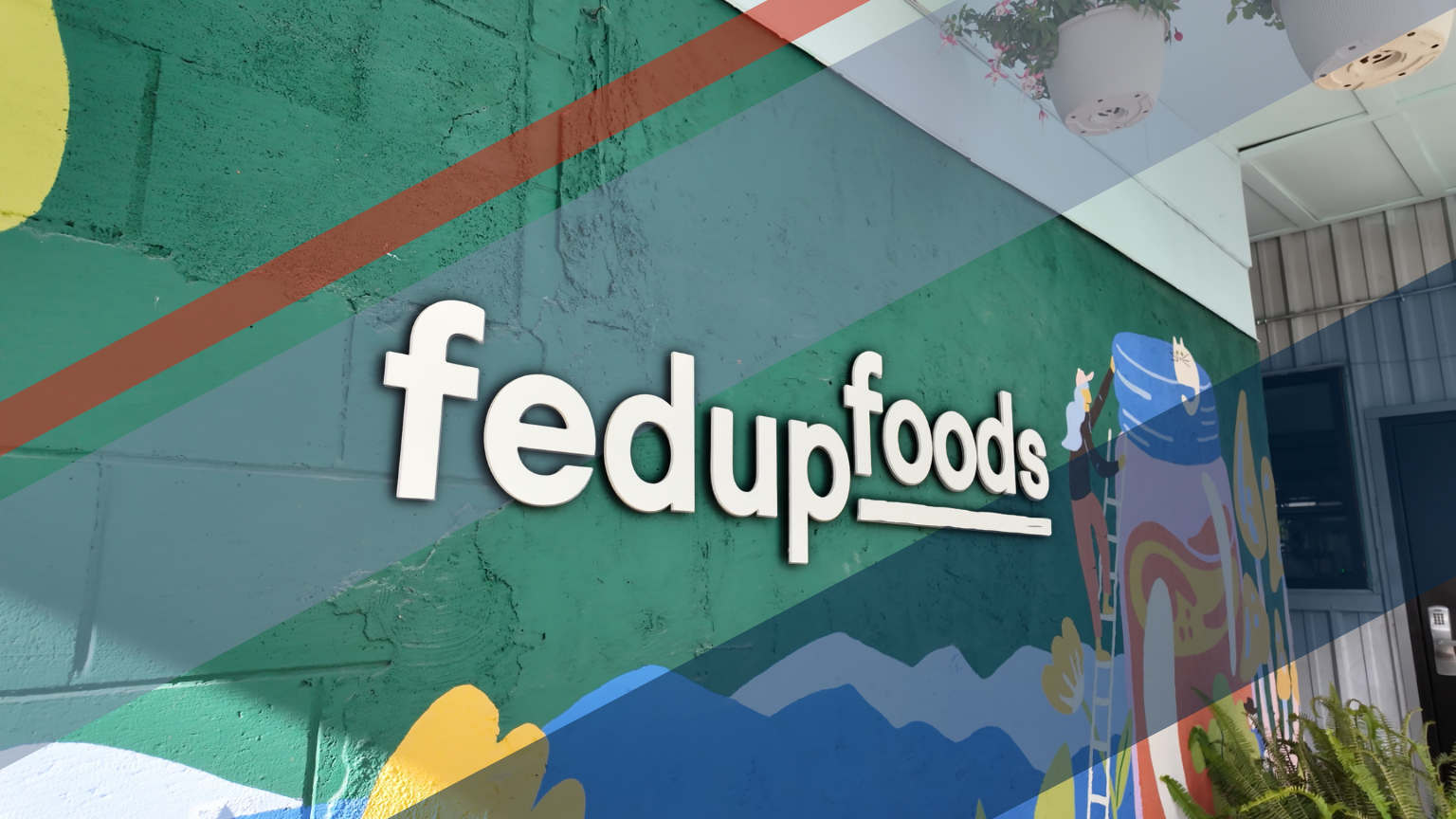
FedUp Foods began in 2008 with a simple idea: make better beverages. Two mothers started brewing kombucha in their home kitchens, guided by a belief that what people drink should actually be good for them. That idea grew into a company, and that company grew into the largest fermented beverage manufacturer in North America. Today, FedUp Foods partners with major grocery retailers across the country to develop and scale private label functional beverages including kombucha, prebiotic soda, energy drinks, cold brew coffee, electrolytes, and protein soda.
Their mission has stayed constant throughout that growth: make delicious, better-for-you beverages more accessible. What has changed is the scale, the complexity, and the speed at which everything moves.
As their business grew, they needed help between their distribution centers, and Covenant was equip to deliver.
The Challenge
Rapid growth in the functional beverage and private label categories created a perfect moment for FedUp Foods. Consumers were already shifting toward drinks that do more, and private label had earned a new reputation as a category leader rather than a generic fallback. FedUp Foods sat right at the intersection of both trends, and the demand reflected it.
But growth at that pace creates real operational pressure. For Jonathan Milkovich, Logistics and Distribution Supervisor at FedUp Foods, the day-to-day reality was one of constant change. Production locations shifted. Volume fluctuated week to week. New customers meant new shipping lanes, sometimes across entirely new regions. "We always were making plans that changed every day," Jonathan said. "We never had structure in the decisions that we were making."
What FedUp Foods needed was not just a logistics provider. They needed a partner that could absorb uncertainty, scale alongside them, and bring structure to an operation that was growing faster than its systems could keep up.
The Partnership
From the very first conversations, what stood out to Jonathan was the hands-on approach. The team showed up on-site, walked the operation, and got into the details of what FedUp Foods was doing and what they could be doing differently. "People were onsite, talking with us, working with us," Jonathan said. "This is what you're currently doing, this is what you could be doing, and this is what we can do for you."
That presence built trust quickly. Today, the team manages 10 to 12 transfers per day between FedUp Foods' Marshall, North Carolina production facility and their warehouse in Erwin, Tennessee, handling finished goods, raw materials, labels, and everything in between. The partnership also covers cold storage coordination with their Charlotte partners, keeping product flowing across an increasingly complex network without FedUp Foods having to manage every detail themselves.
Compliance, is now simply handled. "Having a partner where compliance is not something I have to worry about on a day-to-day basis has been a huge help," Jonathan noted. "A weight issue comes up, a product needs a different determination, it's already handled before I even have to think about it."
"Before I even have the words out of my mouth, I've got an answer or somebody is already working on it. Everything we've done with you all so far has been a cost savings." Jonathan Milkovich, Logistics and Distribution Supervisor, FedUp Foods
The Results
The impact has shown up in measurable ways. Local freight loops that once carried significant cost have been optimized through a partner network that can efficiently handle short-haul routes. Small time savings, five minutes here, a smarter process there, compound across more than 320 operating days a year into real efficiency gains. And the ability to think out loud about future growth, whether that means adding trucks, opening new lanes, or expanding into the Midwest, now happens in collaborative conversations rather than internal guesswork.
"Everything that we've done with you all so far has been a cost savings," Jonathan said. "That flexibility is 100% what was key in our relationship."
FedUp Foods is not slowing down. New categories, new customers, and new regions are all on the horizon. And the foundation they have built, operationally, logistically, and in the relationships that carry it all, is what makes that next chapter possible.